
By clicking “Accept All Cookies”, you agree to the storing of cookies on your device to enhance site navigation, analyze site usage, and assist in our marketing efforts Cookies Policy.
Leading Through the Labyrinth of Service Delivery: A Voyage of Leadership, Innovation and Continuous Improvement – Srikanthudu Avancha
The interest in service delivery actually initiated my journey with a fascination toward how technology can solve some of the complex business problems.
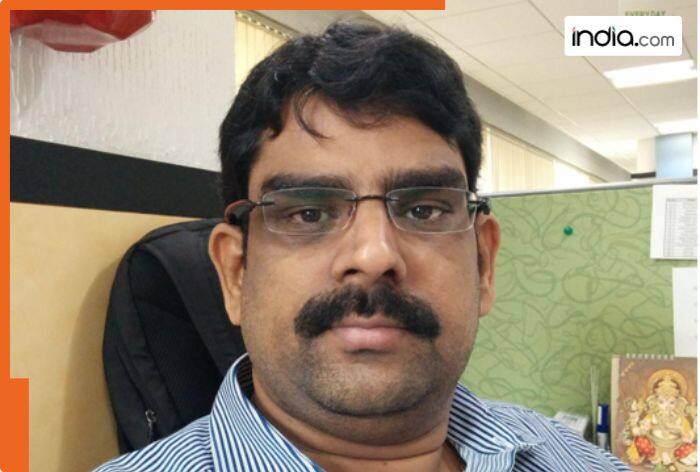
In a world of technology and service delivery that changes day in and day out, and moves forward at the speed of a bullet, few stand out to make sure that the commitment to excellence remains unaltered. Having led large IT projects, programs and operations, driving successful continuous service improvements, and cross-functional teams, time and over again, Srikanthudu (Srikanth) has demonstrated the ability to innovate, inspire, and deliver. From his journey and insights to what it takes to excel in such a dynamic realm of service delivery, we find out in this exclusive interview with him.
Q1: Srikanth, you have a wide range of experiences in service delivery and IT management. What drew you to this field, and how did it all begin for you?
A: The interest in service delivery actually initiated my journey with a fascination toward how technology can solve some of the complex business problems. Soon after my Master’s in Computer Applications, the power of IT dawned on me: not merely in development, but in seamless delivery and continuous improvement. As part of my experience working with with Satyam Computer Services, first-hand experience in managing IT services across various regions: UK, US, and Europe. Working on those transformational initiatives fairly early on catalyzed my interest in service delivery, and I knew this was the path I wanted to undertake.
Q2: You have led large teams across diverse geographies. How do you ensure high performance and collaboration across such diverse groups?
A: Leading a cross-functional, geographically dispersed team is a fair amount of work; at the same time, it is wonderfully rewarding. The key is in building a strong culture of collaboration and open communication. I have led teams of more than 45 members, across Europe and India. What has always worked is standardizing processes and clearly defining roles. Once the SOPs are well defined, everyone knows their role, wherever they may be. Besides, regular communication and performance appraisals align and motivate the team to always go an extra mile.
Q3: What, in your opinion, are some of the high-water moments for you as far as service delivery is concerned?
A:I have been pretty lucky to lead quite a few initiatives that had a lasting impact. Most important was in a big organization wherein service profitability improved by 15% and delivered 10% year-over-year savings through continuous service improvements. The other was transitioning critical support processes while leading 45+ member team across Europe and India. Building a cross-functional support model, establishing contracts with vendors to optimize costs, were some of the things that enabled these successes. Each one of them taught me something new, and that’s actually what’s been driving my passion for innovation.
Q4: Continuous service improvement is an echoing theme in your career; please elaborate on this imperative and how you go about it.
A: Since technology and customers’ expectations are dynamic, service delivery has to improve continually. There is no scope for stagnation. I do this through a continuous assessment of ongoing activities by spotting opportunities to further optimize them. Sometimes, by reducing response times, improving profitability, or adopting best practices from other industries, always remain scope for further improvement. One such project which I am proud of is how we improved on SLA adherence by increasing the response times and reducing the turn around time for critical issues by bringing the KEDB (Known Error Database) for one of our major clients. Continuous evaluation and problem-solving proactively keep the service delivery relevant and efficient.
Q5: Kindly let us know about your experience in client relationship management and how that helped your success?
A: Client relationships form the backbone of successful service delivery. Knowing their needs and aligning our services to meet or beat those expectations has always been my top priority. I have been involved with the management of relationships with clients from various sectors; what really works in all of these is listening, adapting, and delivering on promises. Building trust is about confidence gained through regular check-ins, flowing transparent communication, or offering solutions tailored just for them. It is this that fosters loyalty and opens more avenues for growth and collaboration.
Q6: You have taken teams through some pretty challenging transformations. What do you believe is most important about leading through change?
A: Leading through change requires a clear vision and effective communication. In the transition of support processes to a cross-functional group-based model, communicating ‘why’ was an important reason for the change. People don’t like change, but once the purpose is communicated and the benefits are realized, they become more engaged. Throughout the change process, I kept reinforcing transparency, continuous support to my team, and making sure everyone has what it takes to be successful. Leadership to me is a way to guide people confidently through that gray area of uncertainty.
Q7: How do you ensure that your teams remain agile and can adapt to an ever-changing industry?
A: Agility is key in today’s fast-moving environment, and it starts in the mind. I empower my teams to be change-embracing and challenges as opportunities. We use frameworks such as Scrum to stay flexible and adapt. Having been a Certified Scrum Master myself, I have inculcated agile principles into our daily operations, which enable us to respond swiftly to changing client needs and market conditions. Regular feedback loops and sprint reviews help us stay in tune with business objectives while remaining nimble enough to alter course promptly when needed.
Q8: Throughout your career, in what ways has vendor management been applicable, and how do you ensure success in these partnerships?
A: Vendor management has played a very important role in my career, mainly regarding optimizing costs and enriching service quality. Mutual trust and clear communication are the chemistry on which a successful vendor relationship is built. I have led multiple vendor selection processes, negotiated the contracts that were both cost-effective and in alignment with our strategic goals. Ensuring vendors understand your standards of service delivery and are as committed to meeting those standards is a key aspect of managing vendors. I have been able to drive better outcomes for both the vendor and the client by fostering relationships that are collaborative.
Q9: You have worked on large IT projects, managing a really complex array of stakeholders. How do you go about prioritizing and balancing the needs of different stakeholders?
A: Stakeholder management is all about prioritization and clear communication. Managing large IT projects usually means juggling competing interests; hence, alignment of stakeholders should be done right from the beginning itself. So, I have worked very closely with business teams, internal departments, and external stakeholders to gather and prioritize requirements. The key is to set clear goals for projects right from the outset and ensure that everybody involved in the value chain is aligned on what needs to be delivered and when. Regular status updates and transparency of communication help with expectation management and make for smooth project flows.
Q10: What advice would you give to aspiring leaders in the service delivery space?
A: To the upcoming leaders, my advice is simple: never stop learning, be adaptive, and always keep your eyes on the big picture. Service delivery keeps on changing day in, day out; thus, you need to be open to new ideas, technical innovations, and process improvements continuously. Create good relations with your team, clients, and vendors, and remember that to lead means to serve. The most successful leaders I have seen were the ones for whom growth in a team and the success of clients stood far above any of their accolades.
Conclusion:
The story of Srikanth Avancha is that of grit, continuous improvement, and good leadership. Whether it is leading global teams or driving cost-saving innovation in service delivery, his manner of approach has surely raised the bar higher for the industry. With Srikanth still shaping the future of IT service management, this already is a story of inspiration for aspiring leaders and seasoned professionals alike-a reminder that success indeed lies in the details and relentless pursuit of excellence.
First Published: 22 October, 2022
For breaking news and live news updates, like us on Facebook or follow us on Twitter and Instagram. Read more on Latest Business News on India.com.