
By clicking “Accept All Cookies”, you agree to the storing of cookies on your device to enhance site navigation, analyze site usage, and assist in our marketing efforts Cookies Policy.
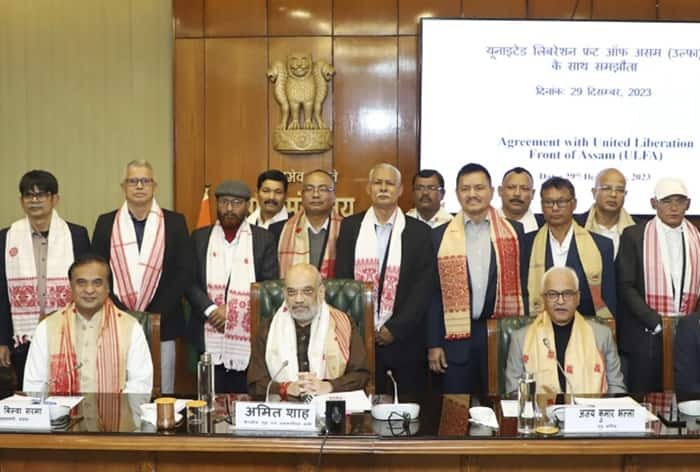
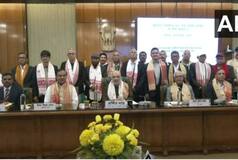
New Delhi: In an effort to put an end to the decades-long insurgency in Assam, the United Liberation Front of Asom (ULFA), the Centre, and the Assam government signed the much-anticipated historic tripartite peace accord here on Friday. A delegation of 16 pro-talk members of the ULFA , headed by its chairperson Arabinda Rajkhowa, represented the faction. Union Home Minister Amit Shah and Assam Chief Minister Himanta Biswa Sarma were present during the peace pact signing.
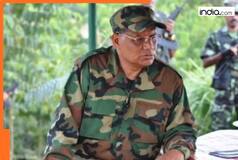
However, the group’s hard-line faction, led by Paresh Baruah, is not part of the agreement. Baruah is believed to be hiding somewhere along the China-Myanmar border, PTI said.
As per the peace deal, ULFA’s pro-talks faction will shun violence, disband the organisation, and join the democratic process. The oldest insurgent group in Assam continued to remain a headache for the central government for decades. It took nearly 12 years of consistent negotiations between the central government and the ULFA faction, led by Arabinda Rajkhowa to seal the pact on Friday. The pact is also expected to end decades-old insurgency in Assam.
This peace deal is certainly a step in the right direction and will contribute to the peace and development of Assam,” Rajeev Bhattacharya, veteran journalist, who has previously interviewed Paresh Baruah, told The Indian Express. “How fruitful it will be depends on the government’s commitment,” the ULFA expert said.
ULFA, formed in 1979 demanding a “sovereign Assam,” carried out a reign of terror in Assam state in the late 1980s, including extortion, kidnappings and killings, especially targeting the state’s flourishing tea companies. It killed several tea planters. Its subsequent subversive actions resulted in the Central government designating it as a prohibited group in 1990.
However, prominent leaders of ULFA were either arrested or surrendered around 2009. But the faction led by Paresh Baruah (known as ULFA-I) is still involved in insurgency activities and has not agreed to come to the table for talks.
Indian military operations against ULFA began in 1990 and have continued until the present.
In 2011, ULFA split after Bangladesh handed over several top ULFA leaders, including Rajkhowa, to Indian authorities. The Rajkhowa faction joined peace talks with the Indian government that year.
ULFA shifted its base to Bhutan, but in 2003 it was attacked by the Indian and Bhutanese armies. Rebels were dislodged from 30 camps in the Bhutanese jungles.
In 2020, more than 600 insurgents belonging to different rebel groups surrendered to Indian authorities in the northeast in response to a government peace initiative that will allow them to rejoin mainstream society. They laid down assault rifles, grenades, bombs and other weapons and were kept in government-run camps and taught technical skills to equip them to take up jobs.
For breaking news and live news updates, like us on Facebook or follow us on Twitter and Instagram. Read more on Latest EXPLAINERS News on India.com.