

By clicking “Accept All Cookies”, you agree to the storing of cookies on your device to enhance site navigation, analyze site usage, and assist in our marketing efforts Cookies Policy.
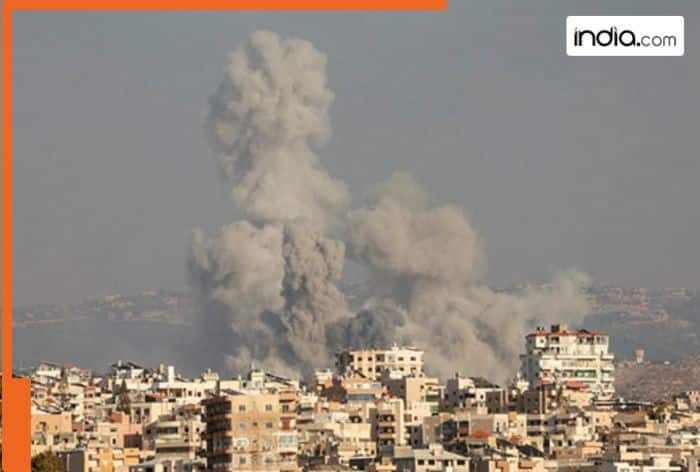
Israeli forces fired at the headquarters of the UN peacekeeping mission in southern Lebanon for the second time in two days on Friday, October 11, injuring four peacekeepers.
This is the first time peacekeepers from the UN mission, which was set up in 1978, have been injured since the recent increase in tensions along the Blue Line that separates Israel and Lebanon.
UN forces seem to be caught in the middle of the growing conflict between Israel and Hezbollah in southern Lebanon.
In recent days, the headquarters of the United Nations Interim Force in Lebanon (UNIFIL) in Naqoura, along with nearby positions, have come under attack.
This is the first time UN peacekeepers, known as Blue Helmets, have been injured since tensions flared on both sides of the Blue Line, which separates Israel and Lebanon.
Earlier this morning, two peacekeepers were injured when an IDF Merkava tank fired at an observation tower at UNIFIL’s headquarters in Naqoura. The tank’s shot directly hit the tower, causing it to collapse and injure the peacekeepers.”Thankfully, the injuries are not serious this time, but the peacekeepers are still in the hospital,” said UNIFIL in a statement on Thursday, October 10th.
The UN also reported that Israeli soldiers had fired at another UN position in Labbouneh, where Israeli forces are engaged in fighting with Hezbollah.
On Wednesday, October 9th, Israeli soldiers “intentionally fired at and destroyed the perimeter-monitoring cameras at the UN position.”
UNIFIL’s statement also mentioned that Israeli forces intentionally fired at UNP 1-32A in Ras Naqoura, where regular Tripartite meetings were held before the conflict started, damaging the lighting and a relay station.
The statement further emphasized that any intentional attack on peacekeepers is a serious violation of international humanitarian law.
France, which has around 700 peacekeepers in the mission, released a statement expressing “deep concern” over the Israeli strikes that hit the United Nations Interim Force in Lebanon (UNIFIL) and strongly condemned any attack on UNIFIL’s safety, according to reports from France24.
On the morning of Friday, October 11th, the Israeli Defense Forces (IDF) struck near UNIFIL’s headquarters in Naqoura, injuring two more peacekeepers. This happened just a day after they targeted the same location.
Earlier today, Friday, October 11th, IDF soldiers in southern Lebanon spotted an immediate threat against them.The soldiers responded by firing at the threat. An initial investigation shows that during the incident, a UNIFIL post, located about 50 meters from the threat, was hit, causing injuries to two UNIFIL personnel,” the IDF wrote on X.
On Friday, October 11th, France announced that it had summoned the Israeli ambassador after explosions hit UNIFIL’s headquarters for the second time in 48 hours.
UNIFIL was created by the UN Security Council in March 1978 to help restore peace along the Israel-Lebanon border. Since the Israeli army withdrew from Lebanon in May 2000, UNIFIL has facilitated meetings between top Israeli and Lebanese officials to address various border disputes, especially after the July 2006 war.
UNIFIL spokesperson Andrea Tenenti, based in Naqoura, told France24 that southern Lebanon had experienced one of its quietest periods from 2006 until October 8, 2023, when Hezbollah opened a “support front” for Hamas following the October 7 attacks.
The conflict between the Israeli army and the pro-Iranian Shiite group Hezbollah had remained relatively low-key until last month. However, it escalated sharply after Israel disrupted Hezbollah’s communication systems on September 17 and 18. Following this, Israel launched heavy airstrikes on southern Lebanon and parts of Beirut’s southern suburbs, intensifying the situation.
Small-Scale Ground Invasions
The conflict took a new turn on September 30 when the Israeli army stated it would start carrying out “limited ground incursions” into Lebanon to target Hezbollah.
Israel also notified UNIFIL about its planned actions and requested them to leave their positions. Similarly, before bombing residential areas, Israel warned civilians in both Gaza and Lebanon.
Tenenti stated, “The Israeli Defence Forces (IDF) asked us to relocate from some of our positions close to the Blue Line.” This line, marked with blue barrels, was established in June 2000. UNIFIL operates 29 bases near the Blue Line with 2,000 peacekeepers stationed there.
Israeli soldiers first entered southern Lebanon on October 1, advancing towards the village of Maroun al-Ras, which is southeast of where UNIFIL’s Irish battalion was stationed. The Irish soldiers refused to leave their post, and later, Irish President Michael Higgins called it “outrageous” that the Israeli Defence Forces had “threatened” the Irish peacekeepers.
Hezbollah claimed that the Israeli army was using the international peacekeeping force as a “human shield.” The pro-Iranian Shiite group urged its fighters to hold back and not respond to Israel’s movements across the southern border, in order to ensure the safety of UNIFIL soldiers.
Peacekeepers Restricted to Their Bases
Tenenti admitted that the Israeli actions “put our troops’ safety at risk.” However, he noted that the 50 countries contributing to UNIFIL have chosen to keep their forces in the area, speaking just hours before the attack on Thursday, October 10th.
A UN source mentioned that UNIFIL will likely adapt to the changing conditions on the ground but intends to remain in the area, similar to its decision to stay during the last major conflict between Israel and Hezbollah in 2006.
France, Italy, Spain, and Ireland, the European countries contributing to UNIFIL, are scheduled to hold a meeting next week.
According to the UNIFIL spokesperson, it is crucial for the international community to keep watch and ensure the UN flag remains present in the area.
He also said, “We cannot let other countries tell us what to do. That is a decision for the United Nations to make.”
“We have decided to stay, even though monitoring the situation is very difficult right now. We can’t allow other countries to dictate what we should do,” he said.
The Blue Helmets are now restricted to their bases and haven’t conducted their regular joint patrols with the Lebanese army since September 30.
Lacking sufficient equipment, the Lebanese army has also pulled back from many of its positions in southern Lebanon.
UNIFIL is focusing on the safety and protection of its 10,500 personnel, including over 9,500 soldiers. Despite being in the “relative” safety of their bases, they still maintain some surveillance abilities.
Tenenti explained that the mission can still “report to the Security Council on the situation,” including details like the number of shots fired, thanks to the radars they have inside their bases.
According to France24, the force commander remains in contact with both Israeli and Lebanese sides, working to end the conflict and restore some stability in southern Lebanon.
Breaches of Resolution 1701
UNIFIL’s mandate is renewed every year, and on August 28, the UN Security Council extended the mission for another year.
The force is sometimes criticized for not fully achieving its mission, particularly the enforcement of Resolution 1701.
The Security Council unanimously adopted the resolution in 2006 as part of a ceasefire agreement between Israel and Lebanon.
The resolution calls for Hezbollah to disarm and move its forces north of the Litani River, about 30 kilometers from the Blue Line. However, Hezbollah refused, stating that Israel still occupies an area of around 20 square kilometers.
Tenenti stated, “Resolution 1701 is still very relevant, but it needs commitment from both sides to be effective.”
He added, “The resolution hasn’t been implemented. We can help, but it’s up to them.” Meanwhile, UNIFIL remains caught in the middle of the clashes between the Israeli army and Hezbollah.
Tenenti wrapped up by saying, “We always have backup plans, but for now, we’re remaining.”
For breaking news and live news updates, like us on Facebook or follow us on Twitter and Instagram. Read more on Latest World News on India.com.